


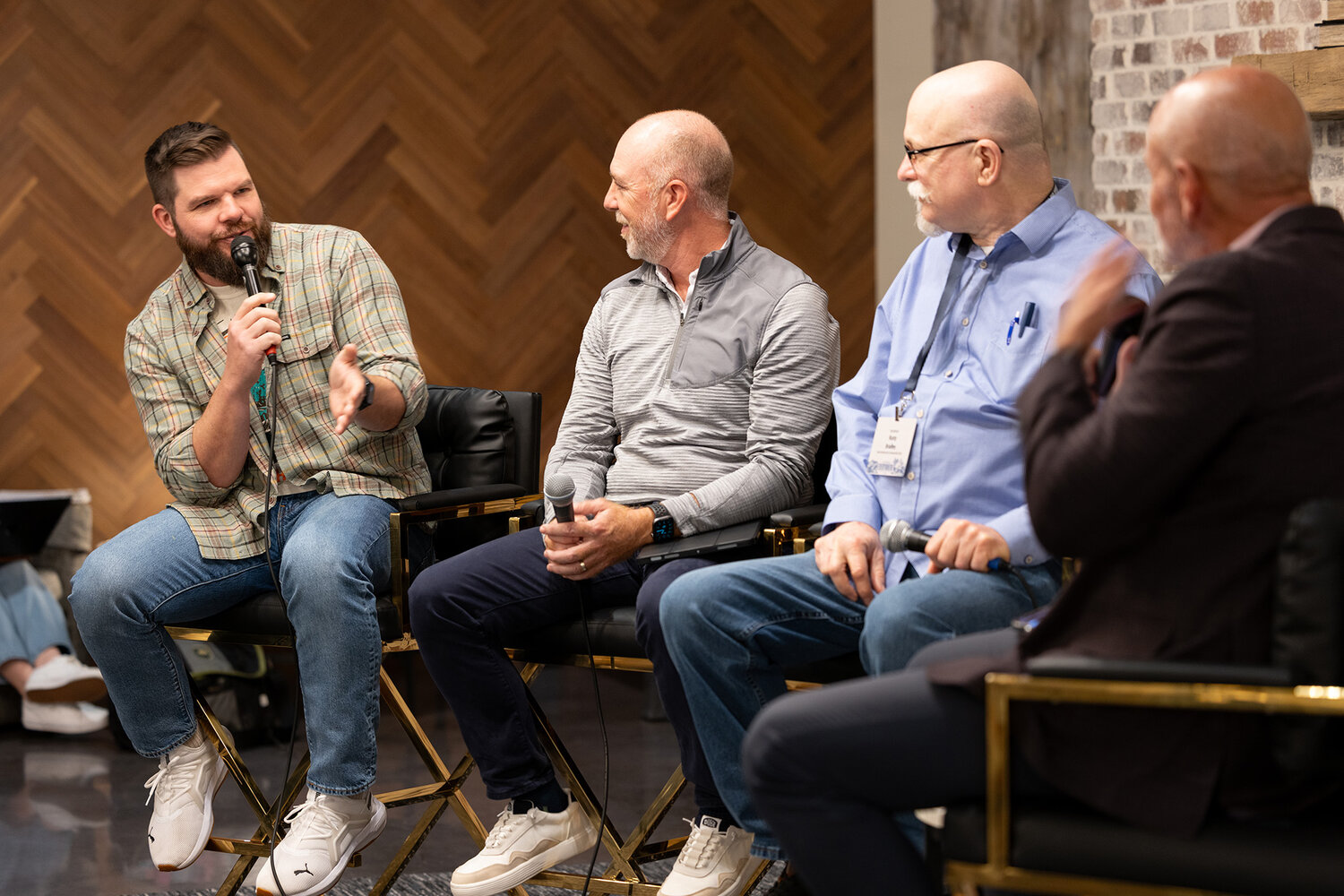


ATLANTA — In addition to sermons and messages from the main stage, the 2025 Georgia Baptist Convention annual meeting last week hosted a series of fireside chats on strategies for making church ministries more evangelistic.
Georgia Baptist Mission Board kids ministry consultant Krista Staton led a conversation on building an effective children’s ministry. Cyd Pagliarullo, family and discipleship minister at Old Fellowship Baptist Church in Brooklet, said it’s important to give kids an encounter with God every time they meet and to make sure each child’s name is known. For Marcia Staub, kids ministry director at First Baptist Church of Tifton, building a foundation where kids encounter Jesus in a real way is crucial.
Lanette James, director of FBA Kids at First Baptist Atlanta, emphasized that the environment should be fun and balanced. “If children aren’t having fun, a lot of times the parents aren’t bringing them back,” she said. “They can’t learn about Jesus if they don’t come.” Staton added that something as simple as slowing your pace can matter. Walking a little slower in the halls, she said, helps leaders feel more approachable to a child.
Mission Georgia lead strategist Beth Ann Williams led a chat on three new ways in which churches can serve through Mission Georgia in 2026.
Georgia Baptist Disaster Relief Director Dwain Carter is leading Mission Georgia Builders, a new ministry focused on church remodeling or additions using volunteer labor. “Basically, it’s churches helping churches,” Carter said. A new trailer with the slogan “Let’s Get To Work” and stocked with tools for the ministry was unveiled at the meeting.
Quillian Mercer, Washington Baptist Association associational missionary strategist and associate director for disaster relief, talked about the “Love Your Neighbor” two-day events that will allow volunteers from across Georgia to come together to “infuse an area” with service projects, such as beautifying city parks or helping churches with minor repairs. He gave one example of creative outreach: doing visitation with a grill in the back of a truck. “One person goes back to the truck to get the hot dog while the other is at the door sharing the gospel,” Mercer said.
Southeast Region Pastor Wellness catalyst Marty Youngblood highlighted opportunities tied to the eight matches Atlanta will host for the 2026 FIFA World Cup. He said the event will create a buzz and give believers a natural way to be in the crowds, “hopefully to lead them to a conversation about Christ.”
Georgia Baptist women’s ministry consultant Stephanie Bennett led a chat on structuring women’s ministry teams. “It does take so many people, and the more women you are engaging in your ministry, the more you are able to expand your reach,” Bennett said.
Brooke Lovingood, groups and women’s ministry director at Watkinsville First Baptist Church, described three pillars of her women’s ministry: going-focused (leaving comfort zones to minister), gathering-focused (events), and Word-focused (Bible study environments). She said the aim is to teach women to share their faith where they already are.
Kim Boyd from Calvary Baptist Church in Jesup shared her church’s three pillars of women’s ministry and team structure: equipping (ministry tools), evangelism (serving and sharing with the community), and encouragement (both in the church and in the community). Calvary has a core team of nine women, ages 20 to 65, so they can connect with all generations. “There is so much we can learn from all generations,” Boyd said.
Amisha Moore of New Providence Baptist Church in Smarr said the GBMB resource “Complete” helped them develop a women’s ministry. The resource outlines five areas: being challenged by God’s Word (through different speakers), experiencing community (intentionally inviting across generational lines), communicating to proclaim Christ (writing out and sharing testimonies), praying at all times (stopping to pray in the moment), and loving by serving on mission (doing various projects that serve others).
GBMB evangelism catalyst Steve Foster led a chat on the 2026 evangelism initiative “Engage 6,” which will feature regionally located equipping sessions with six main focuses of engagement: evangelistic prayer, the Sunday morning experience, personal evangelism, every home, evangelistic events, and follow-up and high-profile Sundays.
Tommy Fountain, senior pastor of 1025 Church in Monroe, stressed the importance of viewing the community as the mission field. “Dive into the ministry, and if you are going to do that, you better dive into the community,” he said. Fountain also talked about the importance of prayer and praying that the congregation catches the pastor’s vision.
Brian Boyles, senior pastor of Church on Main in Snellville, talked about using creative events to draw people in. One example was a helicopter Easter egg drop for families. Other efforts have included dental and medical clinics. Some events will impact Sunday morning attendance, and some will not. “Let’s do such a good job with this event,” Boyles told the group, “that it will make people trust us on Sunday morning.” He also noted the importance of a fresh, well-kept church facility as part of the Sunday morning experience.
GBMB Pastor Wellness lead strategist Chris Reynolds led a chat on building a culture of evangelism in the church.
TJ Mauldin, lead pastor of First Baptist Church of Tifton, talked about being physically present where lost people are and engaging the community in different ways. “I’ve got to be around lost people,” he said, noting that unbelievers are unlikely to show up in his office on their own. “We have to go to them.”
Chris Winford, senior pastor of First Baptist Church Brunswick, said unifying the church as one body is key. “Lost people know when the church is not unified,” he said. He added that churches need to be friendly and simply smile. Reynolds summed it up: “If you don’t like each other, why would we come hang out with you?”
Rusty Bradley, pastor of Lake Seminole Baptist Church in Donalsonville, said Wednesday night prayer meetings, door-to-door evangelism, and revivals are key pieces of his church’s evangelism culture. Even simple efforts, like placing flyers on freezer doors at Dollar General, can be effective outreach, he said.
Winford’s advice for evangelism is to “just do something,” whether it is organized or informal, such as praying for someone. “We don’t do the saving. We do the sharing, and we need to be the best sharers that we can be,” he said. There is no single strategy that is better than all the others, he added.
Mauldin encouraged believers to share the story they have and the gospel they know, because “your worst sharing of the gospel is better than your silence.” Bradley said pastors must champion evangelism for their people. “If I say we need to pray, they pray. If I say go out and visit, then we go out and visit,” he said.
GBMB NextGen catalyst Chris Trent led a chat on building a culture of evangelism in student ministry.
Kyle Ruff, student pastor at Tabernacle Baptist Church in Cartersville, described a Wednesday night strategy his church implemented. In addition to the usual Wednesday activities, he began asking students who they had shared the gospel with that week. The result has been a stream of honest and sometimes difficult testimonies, which led students to pray for classmates and families and even to lead friends to Christ.
For seven months before that, the church discipled students in how to share the gospel. Ruff met with them weekly to ask what he needed to teach so they could be more effective witnesses. The result, he said, is that students come to church as participants, sharing stories and the gospel on stage with their peers, rather than just spectators.
Ruff told the group that if a student is not willing to share at church, “then they are not going to share it in the lunchroom.” The key, he said, is to pray that God will give students the words to speak the gospel in difficult situations.
Trent added that student ministers have to consistently rebuild this kind of strategy because students graduate and move on, but it is critical that they learn evangelism during their teenage years so they carry it into adulthood.
The consistent message from the conversations is that evangelism flourishes when churches are intentional, unified, and willing to go into the community to reach people. The fireside chats offered pastors and ministry leaders practical models and encouragement to continue their shared mission to make gospel conversations a normal part of church life.
___
Video of the Fireside Chats and other events from the annual meeting can be accessed here.
Share with others


